BNSF crews respond to Hurricane Polo flooding across the Southwest and Great Plains
By MIKE PAGEL
Staff Writer
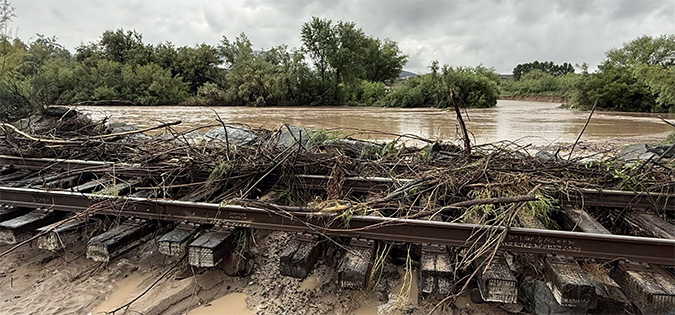
Hurricane Polo brought heavy rain across parts of the Southwest and Great Plains in late September, causing flooding, road closures, power outages and damage to several BNSF rail lines. The storms disrupted operations across multiple states and prompted a large-scale recovery.
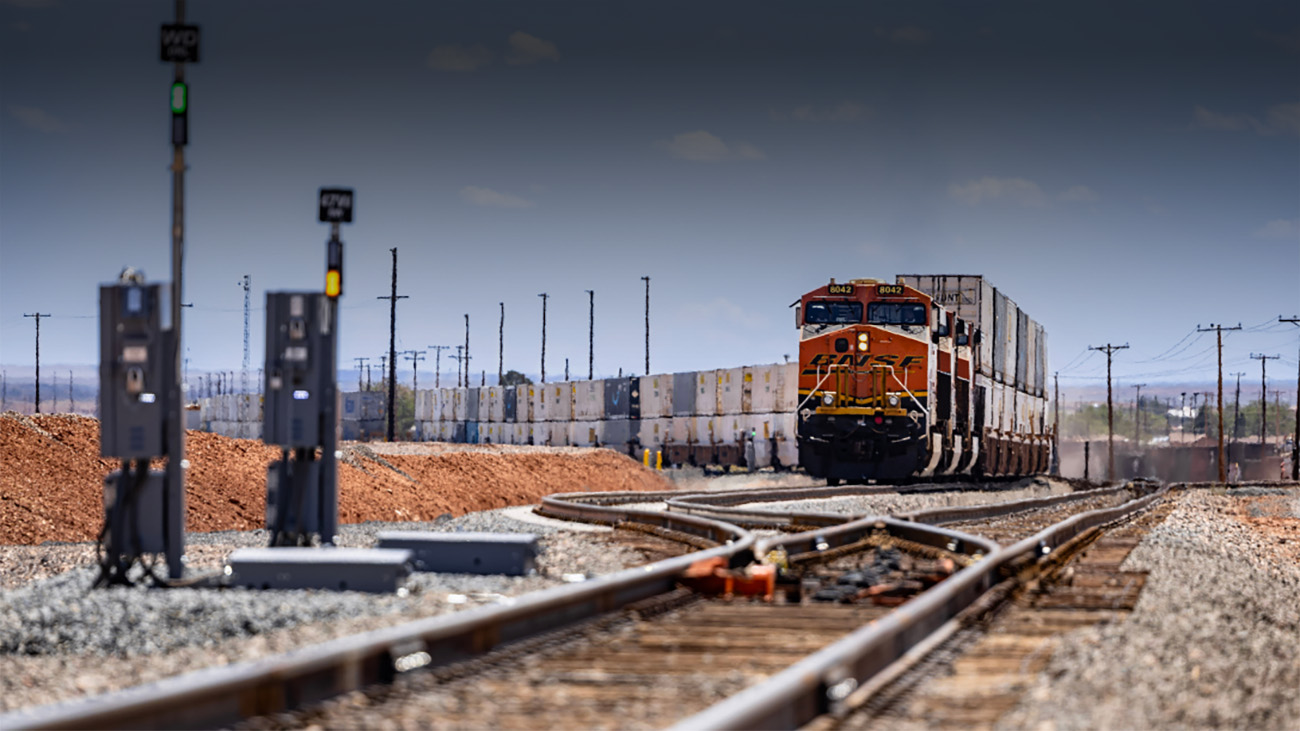
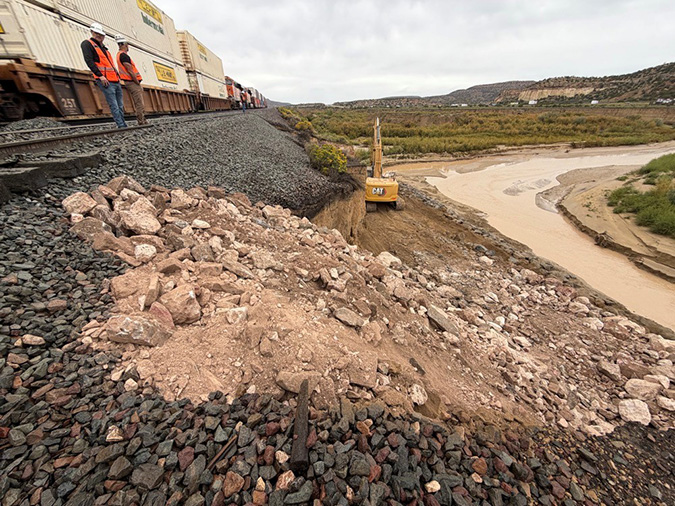
In western New Mexico, heavy rains along BNSF's Southern Transcon caused multiple washouts on the Gallup Subdivision, damaging track and disrupting service. Engineering crews quickly mobilized to assess conditions, stabilize damaged areas and begin repairs.
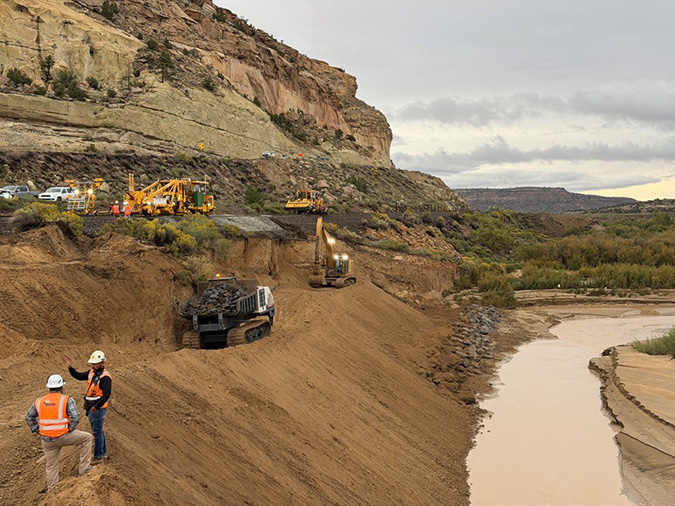
Working in challenging conditions, crews safely rebuilt embankments and restored damaged sections of track. Their efforts included placing approximately 15,000 cubic yards of fill and rock material within a 24-hour period.
"The team really came together and performed some amazing work," said Curtis Heinsen, director of engineering services. "They stayed ahead of the flooding where possible and helped prevent existing washouts from becoming worse while keeping safety at the center of every decision."
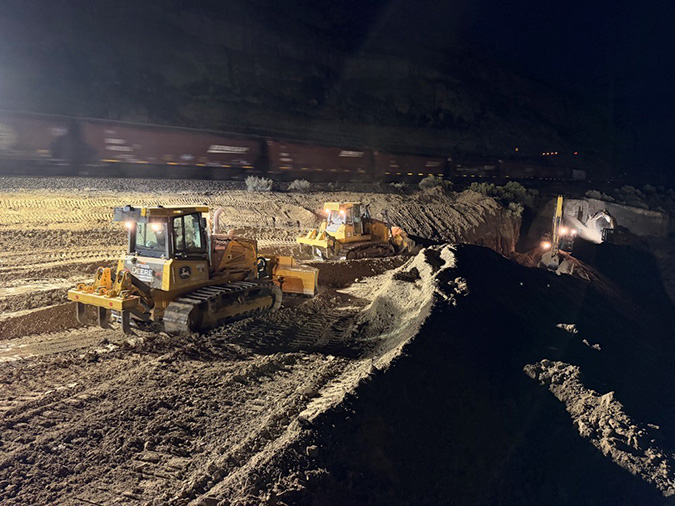
Farther south, heavy rainfall and flash flooding damaged track across a 150-mile stretch of the El Paso Subdivision between Sabinal and Rincon, New Mexico, temporarily taking the route out of service.
As floodwaters receded, crews cleared debris, repaired damaged track and built temporary access roads to reach affected locations with heavy equipment. Despite the widespread damage, service on the subdivision was restored in six days.
“I am extremely proud of the collaboration across field operations teams in coordinating response equipment, ballast trains, and adaptive planning efforts,” said Keneth Reaves, assistant vice president and chief engineer. “Effective communication was critical throughout the response, and the team did an outstanding job providing timely updates, coordinating resources and navigating complex conditions to safely restore service.”
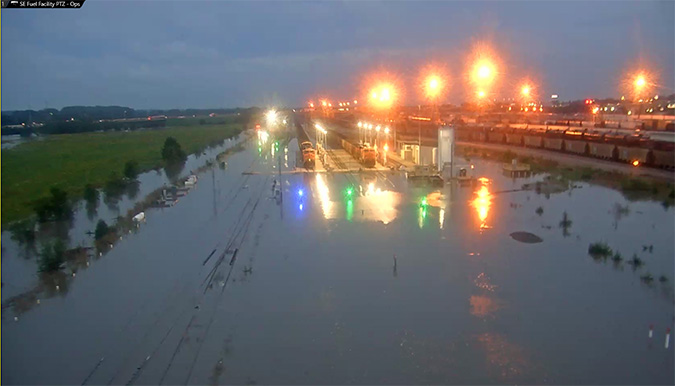
The storms also brought flooding to Lincoln, Nebraska, where nearly five inches of rain fell within just a few hours. High water affected rail operations in the area, while road closures created additional challenges for recovery.
While field crews were at the forefront of the recovery, restoring service required coordination across multiple teams. Environmental permitting specialists worked with regulatory agencies to support emergency repair work and help keep restoration efforts moving forward.
"Each event brings different challenges, but partnering with our teams on the ground and helping remove obstacles so they can focus on recovery is such a rewarding experience," said Kelsey Trom, director of environmental permitting and sustainable development.
The storms highlighted both the challenges extreme weather can create and the importance of preparation, coordination and resilience.
"The response to this event reflects the very best of BNSF," said Grant Haag, vice president of transportation for the South Region. "In the midst of difficult conditions, our teams remained focused on safety and worked together to restore service on these affected lines."
The storms served as a reminder of how quickly weather can affect transportation networks across the country. Recovering from those events takes more than equipment and materials. It takes experience, coordinated planning and a commitment to safety at every stage of the response.
As always, our crews demonstrated the resilience and teamwork needed to overcome challenging conditions and keep freight moving across the BNSF network.